Lucy Hamilton
Updates from the Royal Commission into the selective outrage of Zionists
Block three of the Royal Commission on Antisemitism and Social Cohesion is wrapping up this week, zeroing in on online hate, social media platforms, and traditional media. The sessions have pivoted hard towards digital abuse, deepfakes, and supposed platform failures — as if the real emergency is not the continuing rivers of blood in Gaza, Lebanon and Iran, but Australians daring to express revulsion at it.
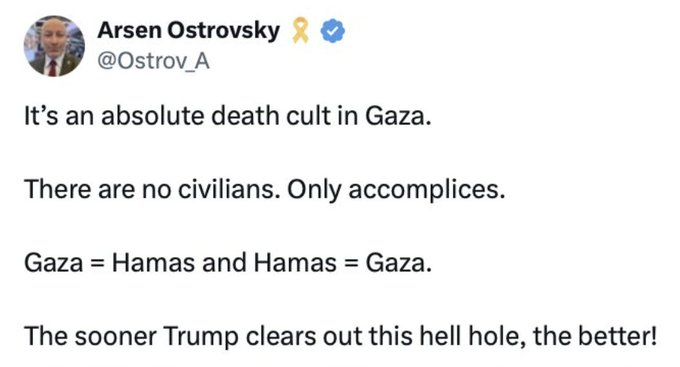
Bondi shooting survivor Arsen Ostrovsky was one of those submitting evidence before the RC. A lawyer long embedded in pro-Israel advocacy, Ostrovsky pushed online for the ethnic cleansing of Palestinians in Gaza in the wake of October 7, justified the destruction of hospitals, and depicted the Palestinians as bugs to be squashed. Despite his own behaviours, he told the commission of a “relentless tsunami of Jew hatred” unleashed after Bondi — that still-murky national tragedy riddled with intelligence lapses and the disputed motives of Indian-born shooters tied to ISIS networks. The sheer brass of it all is almost admirable.
Billionaire Steven Lowy, son of Frank Lowy — the former holocaust survivor turned Haganah terror squad member turned Westfield property empire builder with longstanding Israeli connections — also fronted the inquiry. Prominent at ASIO events and vocal about creating dedicated police units for Jewish communities alongside compulsory national service for everyone else, Lowy detailed the flood of online threats against his family (who is a benefactor to Israel), but did not go into explaining what was behind that spike. A reemerging theme developed as voices from Australia’s wealthiest echelons demanded protections and special treatment, while Israel’s campaign grinds on with mass displacement, infrastructure annihilation, and civilian tolls that draws global condemnation.
As the Zionist community in Australia gets to send their best and brightest to the highest tribunal setting in the country, the broader backdrop reveals how this testimony feeds directly into government action and everyday repression.
In the period of the RC, the Albanese government has reinforced the IHRA antisemitism definition, introduced the Combatting Antisemitism, Hate and Extremism Bill 2026, made antisemitism a top ASIO priority, and granted security funding boosts and diplomatic support for Israel’s “self-defence”. People have lost their jobs, lost income, been suspended, reprimanded or cautioned for opposing this position.
Over 79% of Australians are opposed to Israel, but the people we elect to represent us favour Israel overwhelmingly despite this. And as that majority have seen the carnage and unreasonableness of the belligerents, and felt their hearts cry out to see the end of the death of children and innocents, the Zionist elite of Australia screw down with more outrageous pro-Israel announcements, policies, and demands of a population that has had an absolute gutful. The blind obedience to powerful lobby groups and rich benefactors has come at the expense of the mandate of the people.
All the while, like a missing integer in an equation, the actions of Israel as the driver of global antisemitism and the valid rationale for an anti-Zionist position go unexamined.
Australian Jewish Council President Sarah Schwartz spoke to the actions of Israel and the resulting backlash she has faced from within segments of the Jewish community. Branded a “traitor” for her vocal criticism of the Gaza campaign, Schwartz detailed online abuse and internal ostracism that painted solidarity with Palestinians as betrayal. Her evidence cut against the dominant grain, exposing how the commission’s focus on external “Jew hatred” conveniently overlooks Zionist-on-anti-Zionist-jews pressure campaigns and the weaponisation of antisemitism definitions to silence dissenters who refuse to equate criticism of Israeli policy with hatred of Jews.
This rare counter-testimony highlights the fractures the RC prefers to downplay. While Ostrovsky and Lowy (loyal to Israel) catalogue their digital torment and lobby for expanded safeguards, Schwartz and like-minded voices (as fellow Australians) illustrate how the inquiry risks becoming a one-way street — amplifying calls to equate anti-Zionism with antisemitism while marginalising Jews who reject the genocidal trajectory in Gaza, as well as silencing a majority of Australians more broadly. The hearings have repeatedly shown witnesses linking any discomfort with Palestinian flags or “free Palestine” chants to existential threats, yet offer scant space for the far greater horror of what those chants protest: mass graves, flattened neighbourhoods, and a humanitarian catastrophe enabled by unwavering Western support that some of them have personally lobbied to obtain.
Schwartz’s evidence provides an example of what drives the beating heart of the current wave of global antisemitism: the sustained killing of civilians, the deliberate targeting of children, the doctors raped to death in detention, the endless slaughter. Her point was lost on most of the unabashed pro-Israel ultras that spoke alongside her at this RC.
There are no other minority groups speaking on the rise in racism against immigrant communities at this RC. This isn’t a royal commission into racism and religious persecution that affects millions of Australians: it’s a Royal Commission into the feelings of a population that barely numbers 100,000 locally, at the expense of overwhelming nationwide sentiment that stands in the starkest of contrasts. How can a finding on social cohesion for all of us be found when it can only be defined by the largely subjective pro-Zionist presence?
The juxtaposition on display is brain melting, and the Royal Commission fits nicely into the mix of activities that hum along in a new authoritarian paradigm being forced on this nation by a captured political and media class. Jacinta Allan announced a partnership between Victoria’s hospital and healthcare system and Israel after they damaged or destroyed 94% of hospitals in Gaza, concerned NSW Labor members are violently dragged out of the Labor Conference for uncoiling banners with the Palestine flag, grandmas are arrested in Queensland for daring to mention two bodies of water in a breath. Quite the environment!
The Royal Commission, with all its one-sidedness and all its expectations on everyone else to shoulder the heavy social burden of the demands, only highlights an unacceptable disconnect between a Zionist elite that will not budge and a wider Australian society that has endured many drastic changes to our own lives in the period since October 7. Everyday Australians are starting to ask why they must shoulder more burden, when those asking us to do so cannot even call for a reduction to Israeli aggression abroad, let alone truthfully name it.
As Block 3 wraps up, the Royal Commission’s true colours shine through one final time, as well as the insatiability of those who submit before it. Special envoy Jillian Segal, speaking towards the end of the block, told the commission that Gaza coverage on ABC and SBS has been “overemphasised relative to other global conflicts” and disproportionately gives voice to “anti-Israel perspectives,” exacerbating antisemitism and the conflation of Jewish identity with the state of Israel.
No other conflict has destroyed so many people, so indiscriminately. There are no comparisons. She pushed for ongoing government oversight of the public broadcasters to ensure “balanced and accurate” reporting. In other words, even the national broadcasters — already accused by many of timid coverage — are not toeing the line hard enough for the Zionist establishment. What is enough for the Zionist establishment?
“There are major famines, there are other wars that we don’t hear about at all in Africa,” she said.
Powerful figures like Segal, Ostrovsky and Lowy secure solemn hearings to air their digital woes, yet artists, writers, and academics who dare highlight Palestinian suffering or journalist killings face cancellations, boycotts, and career sabotage. The disparity exposes the project: one side’s “hurt feelings” command royal attention and policy urgency; the other’s documentation of live atrocities earns professional exile and smears. The pattern is unmistakable: a lopsided inquiry more invested in shielding narratives around Israel than confronting the sources of genuine social fracture. A fracture that grows each day, and doesn’t seem to be improving social cohesion in the process.
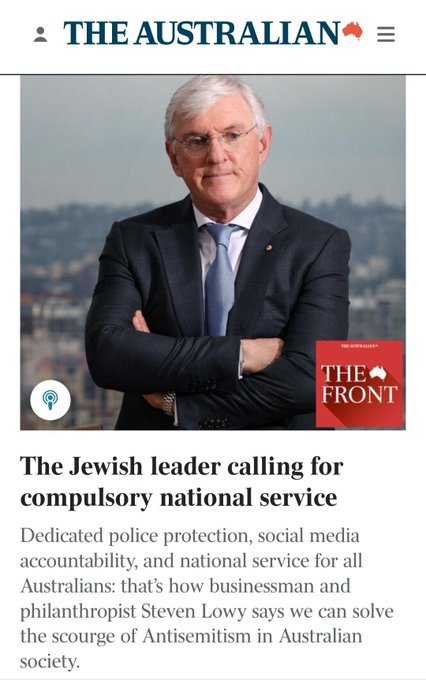
For Steven Lowy, social cohesion means a police force exclusively dedicated to the Jewish population, and a national service scheme for everyone else. For Segal, it is the further pacification of the public broadcaster and the silencing of the Australian people, amongst a raft of other things imposed on the population. Perhaps those exclusive takes on social cohesion are not shared by other Australians? But we will never know. The Royal Commission on Antisemitism and Social Cohesion is not taking hearings from other communities to offer their views on social cohesion, only a small section of the community with opposing views to the majority. It’s sad, dangerous too, but it comes as no surprise.
Subscribe to The Shot
The Shot newsletter is the best way to keep up-to-date with the independent outlet without having to scroll through the hell of social media.
The Sunday Shot
The Shot’s Jo Dyer and Dave Milner are joined each week by a roster of Australia’s best independent journalists and thinkers to discuss what’s been happening this week in politics.
Advertisement