John Delmenico
The violence we still refuse to name
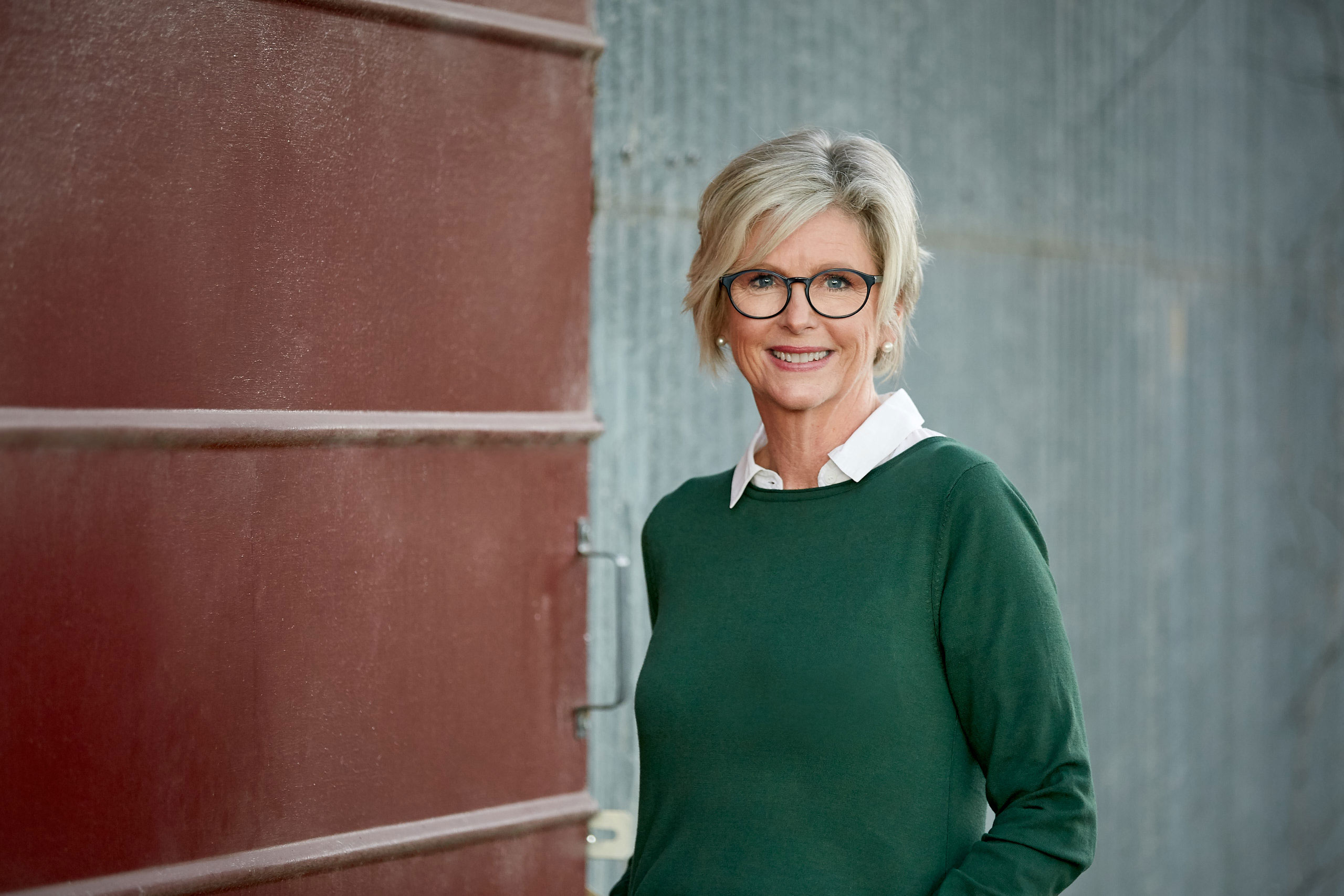
There’s something tragically predictable and revealing about the way Australia has reacted to this month’s/this week’s/Monday’s act of male violence against a woman – the attack on federal MP Helen Haines. While the attack itself dominates national headlines sending certain political journalists into frothy dramatics and interminable chest-beating, the Australian political and media conversation has once again evaded the damning issue at the heart of it all – violence against women.
Many people may not know that long before Helen Haines entered parliament and became known as the decent, fair-minded MP from rural Victoria who pushed for better outcomes for rural communities, Helen Haines was well known as the decent, fair minded citizen from rural Victoria who pushed for better outcomes for rural communities.
Ms Haines spent the first part of her career as a nurse and mid-wife and was responsible for not only helping bring many hundreds of rural babies into the world but was also one of the founders of one of Australia’s longest running and most respected community mid-wifery programs. In short, Helen Haines is the neighbour, the community leader, the generous friend, the member of parliament that every community would be lucky to have.
Through career ambitions and marriage, the lucky community that found her turned out to be the electorate of Indi in north-eastern Victoria, formerly held by independent Cathy McGowan and before that, the Liberal’s Sophie Mirabella. In fact, the electorate of Indi has been led by women for over a quarter of a century. Which makes this week’s act of senseless violence against a woman even harder to fathom.
The problem is, men get their dominance and aggression cues from society every day. Having a woman MP does little to stamp out the all-pervading messaging that expects men to hold power and show toughness and subordinate women.
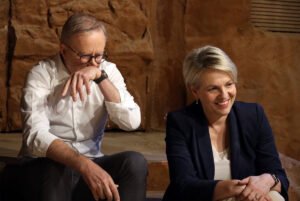
Let’s take the Prime Minister for example. Some may have been comforted to see him front the nation on the night of the attack, expressing his concern for Ms Haines and denouncing angry political rhetoric. This is of course the same Anthony Albanese who only a few weeks before happily posed, grinning with his thumbs-up in a selfie with the king of angry political rhetoric; Trump the adjudicated rapist who calls women pigs and whores and wants his opponents killed.
There is no true leadership coming from a Prime Minister who not only refuses to publicly denounce what Trump stands for, but celebrates it. What Albanese signals to Australian men with his endless happy snaps with Trump, is that treating women like dirt is just fine, that hanging around with rapists is a good thing because, well, because. As all women know, calling women whores and pigs doesn’t affect men, being friends with a rapist doesn’t affect men, so they have no need to draw the line anywhere.
Albanese’s wholesale embrace of Trump tells the women of Australia exactly what Albanese thinks of them too, and it sends a message to men, even if they are never aware of it.
We have had all the usual suspects piling in to wring their hands and wonder where all this anger is coming from, no more so than the very people who peddle it. Pauline Hanson and her money-making team have exploited the hate-vein in Australia’s arm, happily mocking a female MP’s illness, calling returned soldiers cowards and paying for tens of thousands of social media accounts to drive hatred and anger in the Australian community. And wouldn’t you believe it, but there was Saint Pauline herself, claiming horror at what had happened to Helen Haines as somehow, it had all happened in a vacuum.
Then we’ve had the kings of stochastic terrorism, like the Herald Sun and the Courier Mail clutching their pearls and wondering where all this hatred has come from as they grind and grind and grind away at powerful women and glorify the chants to lock-up political opponents and platform the blood and the hate because it all adds dollars to their pockets and why bother maintaining a decent society when you can make money from bloodshed and anger?
The Australian media has so far devoted enormous attention to this dramatic act of violence. They’ve spent 24 hours a day analysing what happened, reconstructing the sequence of events; they have had running coverage since Monday afternoon. But the attention had been curiously narrow. The attack on Helen Haines has been presented as a singular tragedy, a shocking departure from the ordinary, rather than as a manifestation of a problem that Australian women have been describing for generations.
The framing of this as some sort of one-off political attack offers comfort – the comfort of the exceptional case. If this act of male violence is treated as exceptional, if it is just some random one-off, then we can make it belong only to the perpetrator. Men don’t have to look to themselves, they don’t have to wonder if the problem is really society as whole.
They can then attribute the act to this one individual’s anger, or his resentment, or his apparent inability to control himself. Funny how men always manage to control themselves with other men. Funny how they never lose control in a car park full of Hells Angels. Strange that the accused perpetrator managed to meet with state MP Tim McCurdy and never run him over.
When politicians and the media narrowly cast this purely as a political attack and refuse to name the elephant in the room – male violence against women – they escape the consequences. They escape acknowledging and examining the social conditions that shape men’s attitudes towards women; the social conditions that they, all of us, are responsible for.
A close friend called the attack on Helen Haines, ‘a loss of innocence’. I’m not sure that’s true. Several prominent journalists claimed that ‘this has changed us.’ I doubt it. The ugly truth is that in Australia, raging, angry men have been running women down with their cars, setting fire to women, bashing children, killing women, raping women, burning them, throwing their bodies in rubbish dumps, disfiguring them and doing whatever they like in a society that tells them that somehow, they have the right to be angry, they have the right to do as they please to women, including running them down in the street. Just ask the Prime Minister’s good friend, Donald Trump.
Meanwhile, Australian women continue to live with the consequences.
The challenge before Australia now is not to simply condemn this latest act of male violence against a woman. It’s to ask why, despite decades of public discussion, women must still contend with violence as a condition of their lives and their participation in society even as politicians.
If the tragedy surrounding Helen Haines becomes another cycle of headlines and outrage followed by eventual silence, we will have missed an opportunity as a nation. Just this year, Anthony Albanese dismissed calls for a royal commission into violence against women for reasons that he did not make clear but may have had something to do with the fact that the Murdoch media were not manipulating him into one. Perhaps now it’s happened closer to home, he might now reconsider.
Ultimately the measure of our response to this tragedy will not be how loudly we condemn this one man’s act, but whether we’re prepared to confront the ugliness – the structures and the attitudes that continue to allow men’s violence against women to persist.
Until we do, we risk continuing to mistake the reporting of men’s violence against women for some form of reckoning with it – and all women will continue to pay the price.
Subscribe to The Shot
The Shot newsletter is the best way to keep up-to-date with the independent outlet without having to scroll through the hell of social media.

The Sunday Shot
The Shot’s Jo Dyer and Dave Milner are joined each week by a roster of Australia’s best independent journalists and thinkers to discuss what’s been happening this week in politics.

Advertisement