Joel Jenkins
Writing has nothing to fear from AI – just from those who support it
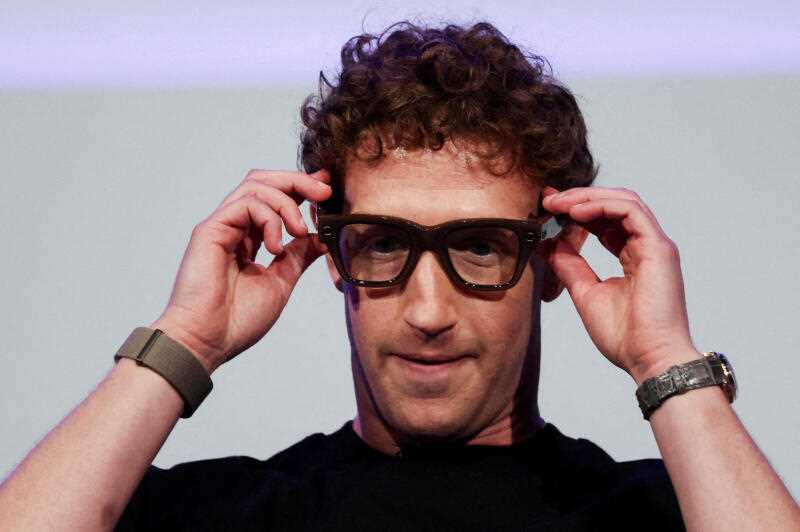
“We’re seeing a year-on-year decline on text,” said Facebook VP for Europe, Middle East and Africa, Nicola Mendelsohn, in a June 2016 interview. “We’re seeing a massive increase, as I’ve said, on both pictures and video. So I think, yeah, if I was having a bet, I would say: Video, video, video.”
It’s the ten year anniversary of Mark Zuckerberg’s ‘pivot to video’ mandate. Video was the future, said Facebook. Not only for entertainment but for news content, education, business and any other type of media which had space for advertising money. The changes born from Zuckerberg’s promise across global media were swift. Writers and editors working at news outlets across the world were sacked in favour of video production and online content creators, delivering short-form video and social media strategies. It was cheaper, faster and held the promise of investor riches. As a bonus, it took a lot of humans, and their salaries, out of the loop. Facebook said it, so it must be true.
Throughout your life, there are books that are so personal that they move in with you and never leave. They live alongside you forever and sometimes alter your world view. When you remember them, the sharp memory of the kind of person you were at that time comes back instantly. Pre-book and post-book.
Shirley Jackson’s The Haunting of Hill House has been celebrated across the world since its publication in 1959. It’s been described as a brilliant story about ghosts and the definitive haunted house tale. But despite numerous accolades and adaptations, the themes of queer-longing that ran through the book like a raging river were largely ignored. People either didn’t see it or pretended it wasn’t there. These decades of denial ironically mirror the main character Eleanor’s frenzied desire to die rather than live in a world with unescapable heteronormativity. Throughout the pages which formed Eleanor and Theodora’s sudden and eye-opening relationship, the readers who could instantly hear Jackson’s inner ache were the queer people who recognised its agonising reality. Myself included.
All the statistical data which Zuckerberg touted to convince media executives that everything you publish from now on should be in video format, turned out to be false. Inflated viewership times which accounted for anywhere up to ’60 to 80 percent’ of their data simply wasn’t real. Facebook knew the data was false as early as 2015 and intentionally covered it up. Thousands of people lost their jobs over a lie and the damage was done. Nevertheless, media executives continued to follow Zuckerberg’s data because they wanted a share of his enormous wealth.
Then in 2019, Zuckerberg tried to convince us that the ‘Metaverse’ was the hot new item to change the world. We were about to hold all our staff meetings inside a virtual world. We would no longer interact in boring old ‘meatspace’ (i.e. real life) but from now on, we will place a VR headset over our eyes and reserve all of our education, entertainment and business for the Metaverse. After losses in the tens of billions of dollars, claims of widespread sexual harrassment on the platform and many of the promised ‘worlds’ never getting past the planning stage, he announced in 2023 that his company would be moving away from the Metaverse. 10,000 people were laid off. He was wrong again.
Well, perhaps ‘wrong’ isn’t the right word. Both projects made him even more of a billionaire so they weren’t the wrong choice as far as his finances were concerned.
And that’s why all of these ventures begin. In the eyes of tech CEOs, it’s never about changing the world, improving how we function as a society, or helping us spend more valuable time with our loved ones. From the beginning, it was only ever about one thing: putting more commas in Zuckerberg’s bank account. Either so he could add more thousands of acres to his $300 million Hawaii compound or to ‘donate’ millions of dollars to guarantee government assistance in those pesky anti-trust lawsuits.
The first time I read Dee Brown’s Bury My Heart At Wounded Knee is as clear as the atrocities that lay within its pages. I recall reaching for my mother’s 1979 copy of the book in her brown bookshelf because I liked the picture of the horse on the cover but it didn’t take long before I felt the raw pain and silent rage emanating from voices long dead. The untold story of the Native American’s experience of colonisation is just as shattering to read now as when it was first published in 1970. The romantic image of the ‘Wild West’ was forever changed when countless tales of government-approved mass murder moving across North America like an unstoppable wave became too horrific to ignore.
Video as a concept, especially the way Zuckerberg wanted it to be, is ultimately a passive invention. It lays everything out for the viewer and, despite the most avant-garde auteurs, largely does the storytelling for you. But the written word that Facebook assured the world was set for the rubbish heap is different. It’s active. The reader injects their own experiences and perspectives into what they’re reading. In fiction, they largely decide what a character looks like, how they move through the world and pass judgement or even forgive people for their actions depending on how compelling and relatable the words are. All thanks to the creative skills of the writer.
So now it’s 2025 and Zuckerberg is telling us artificial intelligence is the horse to put all your bets on. He wants it to become our best friend and says targeting people with ‘personal superintelligence‘ will soon be the way of the world. In the US, Zuckerberg’s Meta is building an AI data centre in the state of Wyoming that will use more electricity than every home in the state combined.
There’s over 250 data centres in Australia, with almost 200 more planned. This is where AI lives. Companies such as Equinix and NextDC are building these facilities everywhere from Footscray in Melbourne to the Pilbara Region of Western Australia. In Sydney alone, the NSW government has approved 10 new data centres to be built over the next few years. These data centres are massive operations requiring huge amounts of land, water and power. But not for the purpose of supporting anything that’s alive. By 2035, it’s estimated that these centres could be using a quarter of Sydney’s water supply for cooling purposes.
Aside from the environmental impact, writers and editors are being laid off again. Executives are confused as to why they’re paying these unnecessary salaries when generative AI and ChatGPT is free. But as with Zuckerberg’s previous fallacies, there’s an inherent truth that can’t be denied. Within creative writing, a relationship exists between the reader and the writer which grows exponentially with every word, sentence and paragraph. This relationship can be created with any kind of writing but when it comes to creative writing, it’s made to last.
A reader can completely control their surroundings which can frame, diminish or underscore what they’re reading. The way the light of a lamp hits the page or their choice of relaxing background music that accompanies the words. It becomes their idiosyncratic journey. In such an unpredictable world that we live in, a sense of control is captured and perhaps even reclaimed during those meagre moments when we return to reading a good story instead of passively participating in ‘the macro trend of content consumption’. It’s an extremely personal experience which can either be a form of meditation or an act of rebellion depending on the very precise combination of the story, the person reading it, and the moment in time that they meet.
The most surprising revelation about Tim Winton’s In The Winter Dark was the idea that ‘Australian Gothic’ was not only a viable method of storytelling but it could be built upon regret, guilt and self-denial. The story of four tragically lonely souls in the Australian mountains says more about the fears we don’t face than whatever that book’s shadowy presence lurking in the bush could ever manage. It is terrifying to realise the destructive capability of the things we don’t say to each other and how poisonous that dissent can be as the decades fall through our fingers. Winton’s grisly tale opens a cultural vein of Australia that its people still only speak of in whispers and by the time the story is told, an overwhelming need to not be trapped by our own mistakes is thrust upon the reader.
At its height, the written word is forged through unique human experience. Our lives are so nuanced and strange, they can never be replicated by a machine in any lasting or relatable way. That time you accidentally laughed during someone else’s wedding vows. The equal amount of sorrow and relief and guilt you feel when a sick parent finally dies. Or cooking a meal so perfectly that it saves a friendship.
The interlocking parts that come together when a writer’s work meets a reader’s heart can change the direction of someone’s life. When this happens, layers of honest storytelling can peel away our deepest fears and desires to frame them in ways that we either hadn’t considered or been unable to manage before. This relationship, and the methods that are used to produce it, must be encouraged, studied and protected as one of the most valuable achievements by humans in the history of this tiny little planet.
The technology of generative AI on its own isn’t inherently bad. But the rush to embrace it at the cost of people’s lives, the environment and the concept of truth in the modern world, certainly fits all the parameters of evil. The good news is, the relationship between writer and reader acts as an impenetrable litmus test when it comes to the enduring power of creative writing. Something this unique can never be recreated using AI and anyone who says it can is the real threat.
Subscribe to The Shot
The Shot newsletter is the best way to keep up-to-date with the independent outlet without having to scroll through the hell of social media.

The Sunday Shot
The Shot’s Jo Dyer and Dave Milner are joined each week by a roster of Australia’s best independent journalists and thinkers to discuss what’s been happening this week in politics.
Advertisement